
One of the biggest mistakes I see new orchard growers make is planting trees based on what sounds good instead of what actually fits their space and daily life. Fruit trees are forgiving in many ways, but size, spacing, and maintenance aren’t things you can easily undo later.
Choosing trees that work with your yard and your skill level makes orchard care far more enjoyable — and far more successful.
1. Dwarf, Semi-Dwarf, or Full-Size: Choosing the Right Tree Size
Fruit trees come in different sizes, and those differences matter more than most people expect. Tree size is usually determined by rootstock, not the fruit variety itself.
In general:
-
Dwarf trees stay smaller, often topping out around 8–10 feet. They’re easier to prune, spray, and harvest and work well in small yards or tighter plantings.
-
Semi-dwarf trees grow larger, usually 12–18 feet tall, and strike a good balance between manageability and production. This size works well for most backyard orchards.
-
Full-size trees can reach 20–30 feet or more. They’re long-lived and productive but require plenty of space and a willingness to manage a much larger tree.
Smaller trees can still produce abundant harvests, and they’re often easier to live with long-term.
2. Give Trees the Space They Actually Need
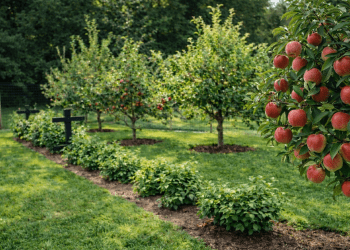
Young trees are deceiving. They look small and harmless when planted, which makes it tempting to tuck them closer together. Over time, that lack of space catches up quickly.
Proper spacing allows for:
-
Better airflow
-
Improved sunlight exposure
-
Easier access for pruning and harvesting
Crowded trees are more prone to disease and often produce less fruit. Taking the time to space trees correctly now saves years of frustration later. When in doubt, err on the side of more space rather than less.
3. Rootstock Choices Shape Long-Term Success
Rootstock affects far more than height. It plays a role in how a tree handles soil conditions, drought, disease pressure, and overall vigor.
The same fruit variety can behave very differently depending on the rootstock it’s grafted onto. Some rootstocks tolerate wet soils better, others stay compact, and some offer increased resistance to certain diseases.
Buying from nurseries that clearly label and explain their rootstocks helps ensure the tree you bring home is suited to your conditions — not just your wish list.
4. Match Trees to Your Time, Energy, and Experience
Fruit trees aren’t difficult, but they do require attention. Some are very forgiving, while others demand regular pruning, monitoring, and intervention.
It helps to be honest about:
-
How much time you want to spend on maintenance
-
Whether you enjoy learning hands-on skills like pruning
-
How hands-off or involved you want your orchard to be
Starting with easier, lower-maintenance trees builds confidence and keeps the experience enjoyable. You can always add more challenging varieties later as your skills grow.
An orchard that fits your space and lifestyle feels manageable, rewarding, and sustainable. When trees are sized and spaced appropriately — and matched to your energy level — caring for them becomes a pleasure instead of a chore.