
Once you know what will grow well in your climate, fit your space, and actually produce fruit you’ll enjoy, the next step is finding the right trees to bring home. Where you buy your fruit trees — and how you buy them — plays a huge role in how successful your orchard will be long-term.
Not all trees are created equal, and not all sellers set you up for success.
1. Reputable Nurseries vs. Big-Box Stores
It can be tempting to grab a fruit tree while wandering through a big-box store in spring. They’re convenient, inexpensive, and easy to impulse-buy. Unfortunately, they’re also one of the most common sources of disappointment.
Reputable nurseries tend to:
-
Clearly label varieties, rootstocks, and chill hours
-
Offer trees suited to specific climates
-
Provide healthier, better-cared-for plants
Big-box stores often carry:
-
Limited or poorly labeled varieties
-
Trees that may not be well suited to your region
-
Plants that have been stressed by inconsistent care
Fruit trees are a long-term investment. Spending a little more upfront for quality and clarity usually pays off many times over.
2. Regional Suppliers vs. National Sellers
There’s real value in buying from nurseries that understand your climate. Regional suppliers tend to focus on varieties that actually perform well where you live, not just what sells nationwide.
Regional nurseries often:
-
Specialize in locally proven varieties
-
Understand common regional diseases and challenges
-
Offer better guidance for your conditions
National sellers can still be excellent, especially if they clearly list chill hours, rootstock information, and growing requirements. The key is choosing sellers who are transparent and detailed — not vague.
3. Bare-Root Trees vs. Potted Trees
Fruit trees are typically sold either bare-root or potted, and both have their place.
Bare-root trees:
-
Are usually less expensive
-
Are planted while dormant
-
Often establish quickly once planted
-
Have a shorter planting window
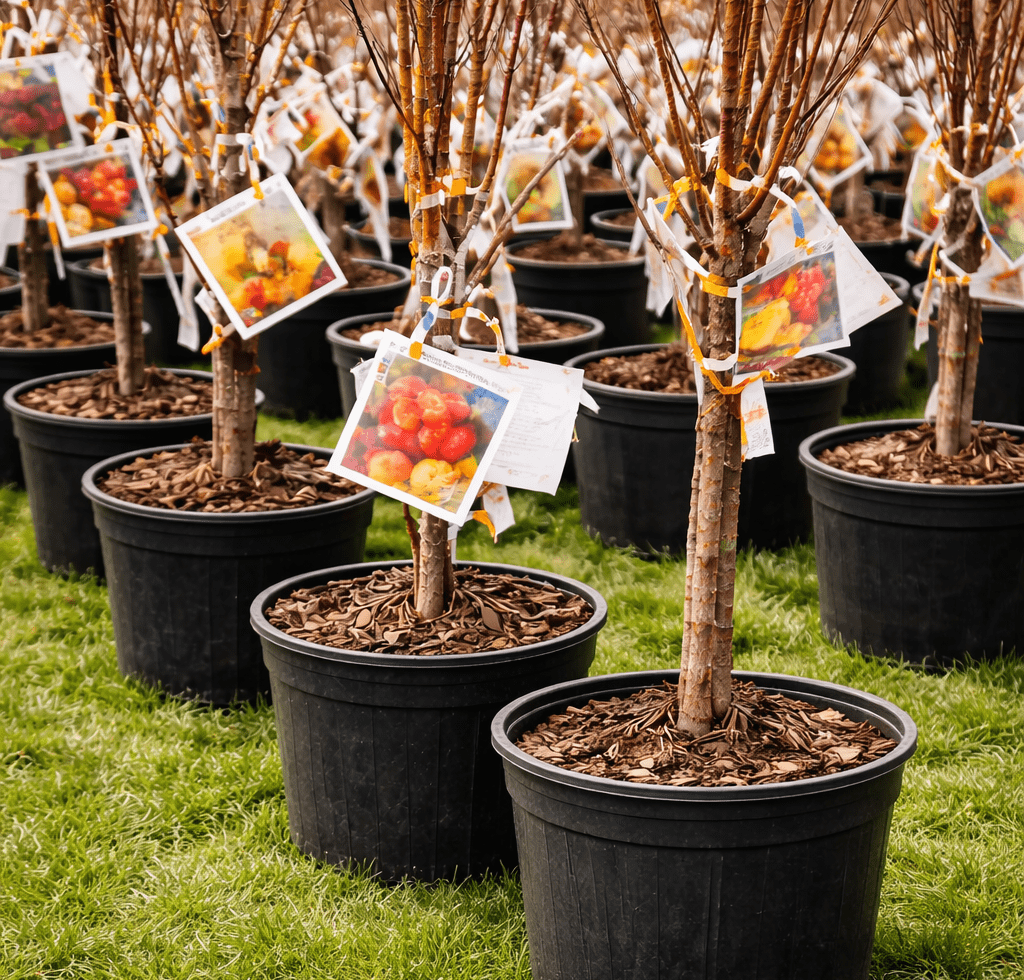
Potted trees:
-
Can be planted over a longer season
-
Are easier for beginners to handle
-
Tend to cost more
-
May experience transplant shock
Bare-root trees are a favorite for many orchard growers because they adapt well and encourage strong root systems — as long as you’re ready to plant when they arrive.
4. What to Look for in a Healthy Tree
No matter where you buy your trees, it’s important to evaluate their condition before planting.
Look for:
-
A strong, straight trunk
-
No major wounds or cracks
-
Healthy buds and flexible branches
-
No signs of pests or disease
Avoid trees that look stressed, have damaged bark, or show obvious signs of neglect. Starting with a healthy tree gives you a much better chance of long-term success.
By the time you’re ready to buy fruit trees, you’ve already done the hardest work: understanding your climate, space, and goals. Choosing quality trees from thoughtful sources is the final step in setting your orchard up for success.
With the right trees in hand, you’re ready to move on to planting, care, and watching your orchard take shape over time.